
How to Check if a Hotel is Safe: A Practical Guide for Travelers
How to check if a hotel is safe starts well before you book and continues through your stay. Many travelers worry about hidden security risks, yet practical, actionable steps exist to help you confidently select safe accommodations and verify your room’s security upon arrival. This guide explains how to research hotels remotely, select the safest room, perform an in-depth security check once inside, and maintain ongoing vigilance during your stay to reduce risks like theft, personal harm, or other safety concerns.
Key Takeaways
- Use vetted hotels and analyze neighborhood safety with tools like Google Maps and traveler reviews before booking.
- Choose hotel rooms on middle floors, away from elevators, busy corridors, and street-facing windows for better security.
- Immediately check all locks, safety devices, fire exits, and the in-room safe upon arrival to address any concerns early.
How to Research and Identify Safe Hotels Before Booking
Knowing how to check if a hotel is safe starts with thorough pre-booking research. You can avoid many risks by carefully vetting the property and its neighborhood remotely before securing your reservation.
Use Approved or Vetted Hotel Lists
Many countries and local organizations maintain lists of hotels that meet certain safety and security standards. For example, the International Federation of Red Cross and Red Crescent Societies (IFRC) recommends using such vetted hotels when possible as a baseline for safety.[1] If you are unsure whether a hotel is on these lists, contact local offices or tourist boards to ask for their recommendations.
Read Recent Public Traveler Reviews Focusing on Security
Websites such as TripAdvisor and Hotels.com offer many traveler reviews. Pay attention to recent comments about safety concerns, incidents, or how the hotel manages its security features. Reviews that frequently mention security guards, surveillance cameras, or general guest safety offer useful insights.
Evaluate the Neighborhood Using Google Maps and Street View
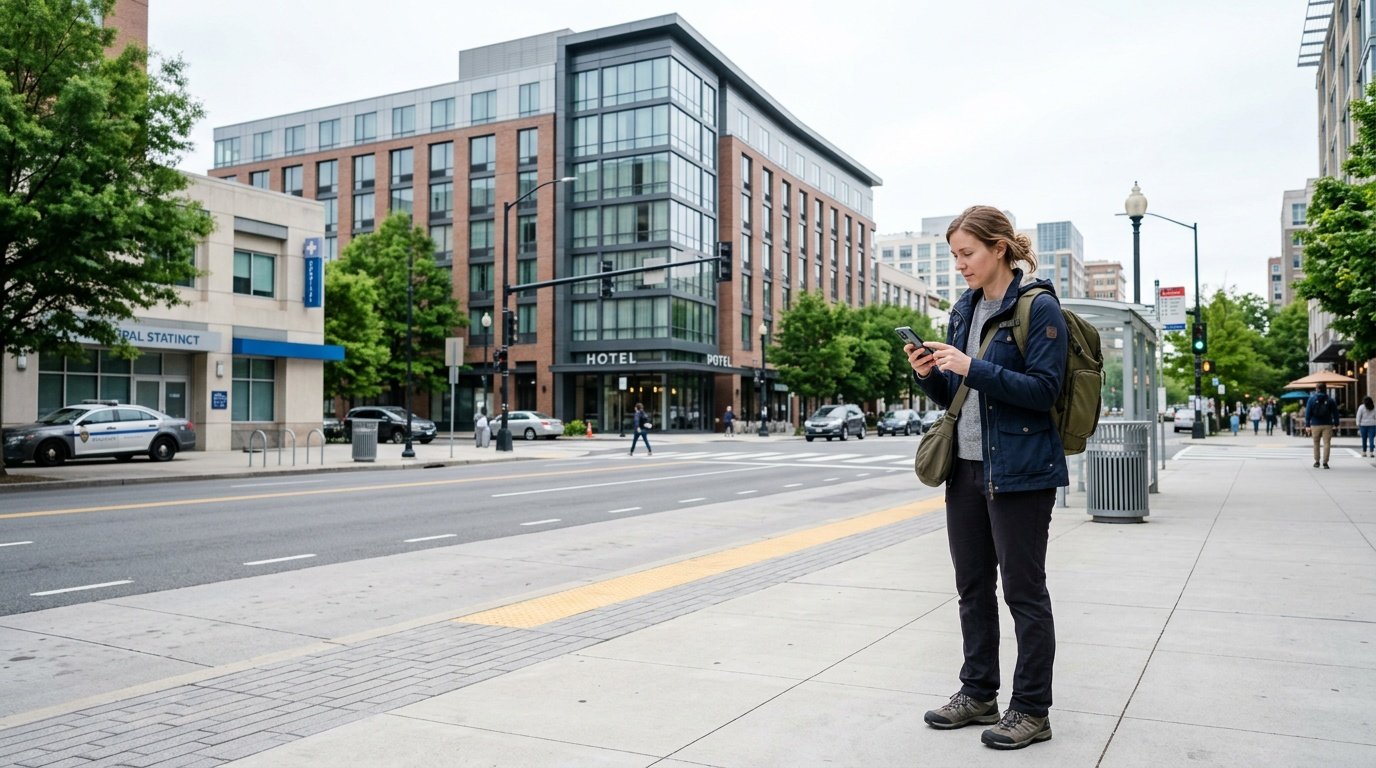
Use online mapping tools to examine the hotel’s surroundings. Check proximity to police stations, hospitals, and public transportation hubs as these reflect emergency access and safety infrastructure.[3] You can also gauge the condition of streets, lighting, and foot traffic patterns by browsing Street View.
Look for Hotels with Robust Security Features
Prioritize properties offering 24-hour staffed lobbies, security guards, gated entrances, and visible surveillance cameras covering the lobby, corridors, stairwells, and parking areas. According to multiple travel security guides, these features help deter criminal activity and create a safer environment.[2]
Remember that no single source guarantees safety. Lists vary by country, and neighborhood crime data may be incomplete or outdated. Use a combination of resources for the best assessment.
For deeper guidance on vetting hotels before booking, also see our travel security gear guides for complementary tips on travel safety.
What to Consider When Choosing Your Hotel Room for Safety
Once you select a hotel, your room choice matters significantly for personal safety. Knowing how to choose safe hotel rooms can reduce risks of unauthorized entry, noise, or emergency complications.
Avoid Ground-Floor Rooms
Ground-floor rooms make access easier for unauthorized persons and often overlook public walkways or parking areas. Security experts and travel organizations agree that avoiding these rooms minimizes break-in risks.[3]
Choose Middle Floors (2nd to 6th Floors)
Rooms between the second and sixth floors balance security and emergency access. They are hard to access from outside and usually remain reachable by fire ladders or emergency responders. Lower floors may be accessible via windows or other entrances, while higher floors can delay rescue operations.[4]
Prefer Rooms Away from Elevators, High-Traffic Corridors, and Windows Facing the Street
Bedrooms next to elevators or busy hallways face greater foot traffic that compromises privacy and increases noise. Rooms overlooking busy streets present higher risks of observed comings and goings or possible external intrusion. Selecting interiors away from these risk zones enhances privacy and safety.
Ensure the Room Has Functional Secondary Locks
Rooms equipped with deadbolts, chains, or security latches provide important additional protection beyond the main lock. Choose rooms that feature and maintain these security devices for enhanced peace of mind.[4]
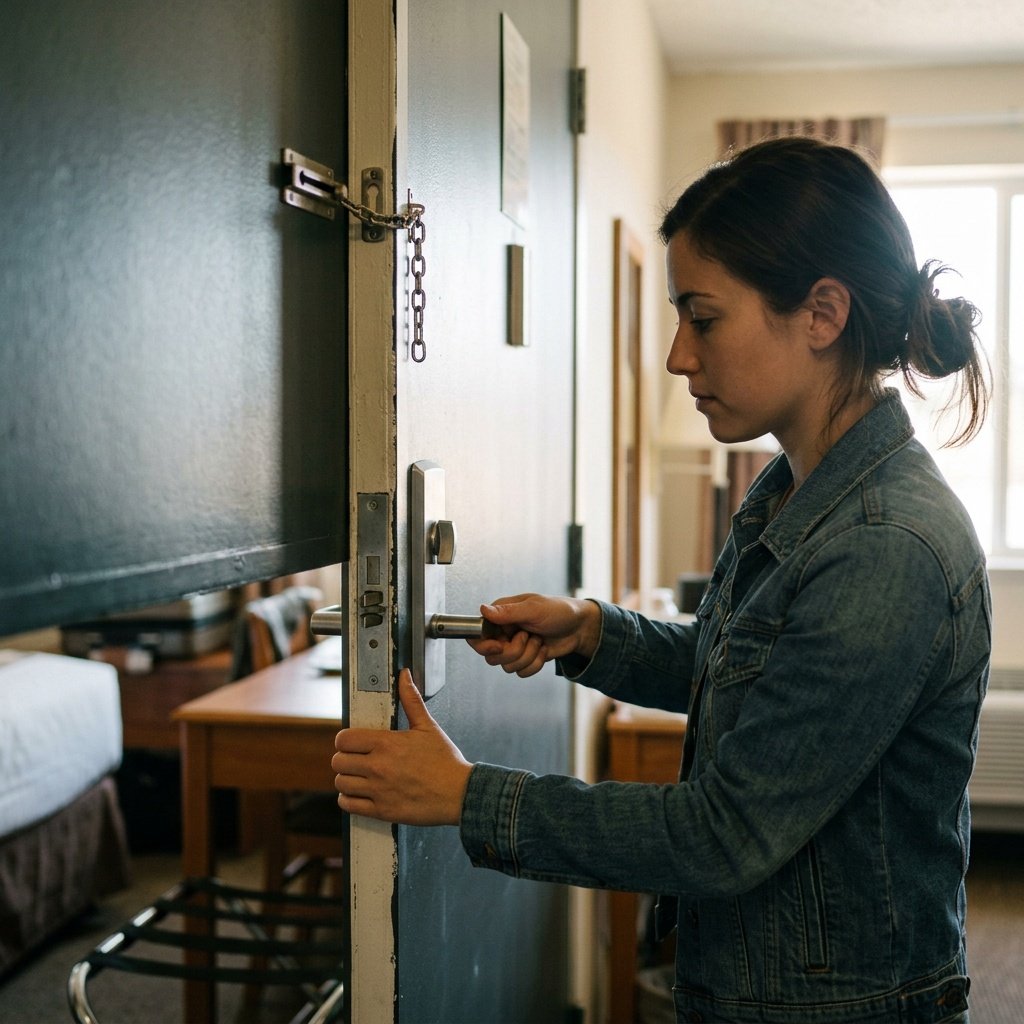
If your first room choice lacks key safety features or does not feel secure, do not hesitate to request a different room. Prioritizing your comfort and safety is critical.
For additional in-room safety ideas, consider our travel security gear guides covering devices and accessories that support hotel room security.
How to Conduct a Hotel Room Security Check on Arrival
Knowing how to check if a hotel is safe involves verifying your individual room’s security upon arrival. This immediate inspection helps identify any safety gaps so you can request a room change or take steps before settling in.
Step-by-Step Hotel Room Security Check
Follow this practical checklist the moment you enter your room:
- Test all door locks: Check if the main door lock and any deadbolts or secondary locks fully engage and secure properly.
- Verify window and bathroom door locks: Ensure all windows close tightly and have functioning locks. The bathroom door lock should also work to prevent intrusion if sharing a room.
- Check smoke detectors, carbon monoxide detectors, and fire extinguishers: Confirm these devices exist and appear functional. Listen for alarms or ask staff for maintenance information.
- Identify and verify fire escape routes: Locate the nearest fire exits and ensure the paths are unobstructed.
- Test the in-room safe: Open and close the safe, and count any cash or valuables you intend to store. Staff typically know the master PIN, so avoid keeping all credit cards inside.
- Keep your room key separate: Do not carry your room key attached to a card or item that clearly shows your room number for enhanced privacy.
- Request room number discretion: If staff announce your room number aloud upon check-in, ask them to handle it silently or in writing to avoid unnecessary disclosure.
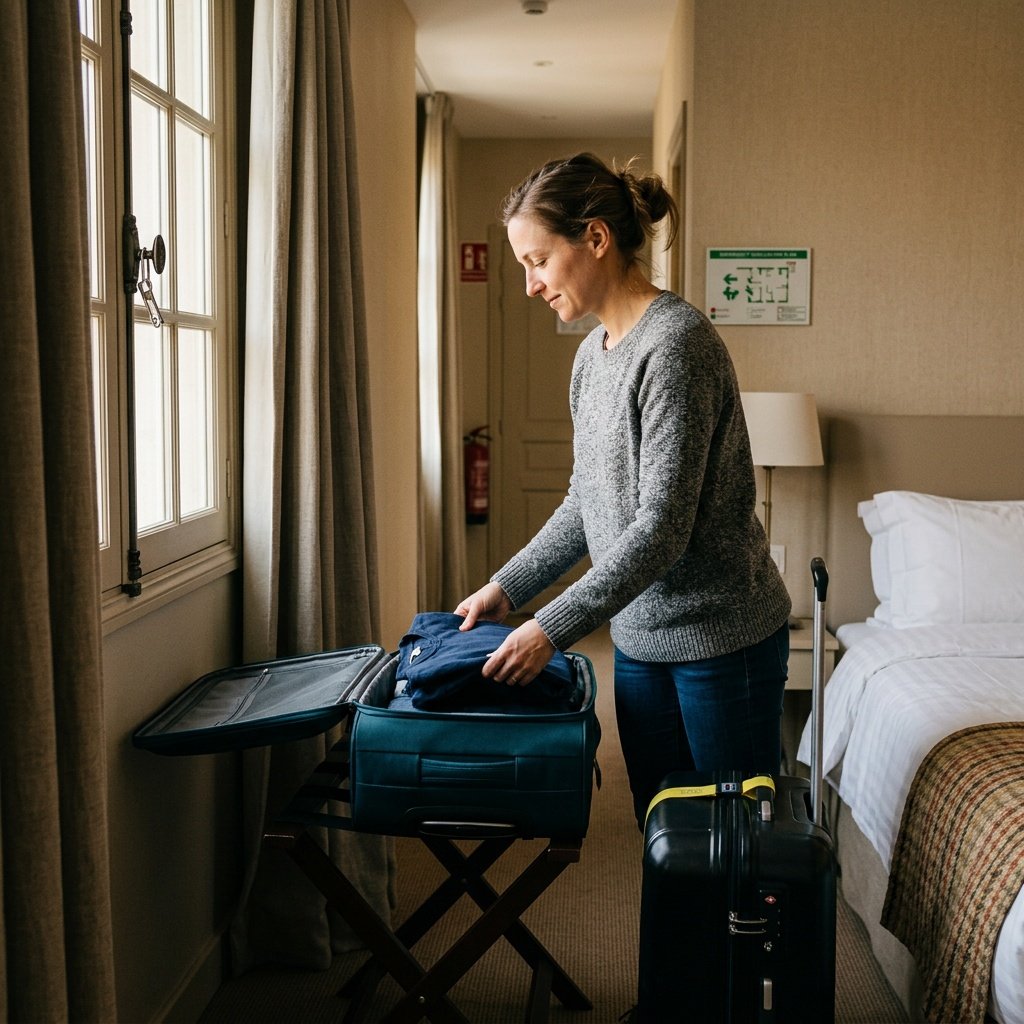
If any of the above safety measures are missing, broken, or malfunctioning, promptly request a different room or hotel management intervention. Your safety depends on effective security features working as intended.[1]
Safe Practices During Your Stay
Your vigilance throughout your hotel stay helps maintain security and prevent theft or harm. Follow these best practices:
- Keep belongings and luggage locked or with you when leaving your room; do not leave valuables unattended.
- Avoid leaving sensitive documents such as passports at the front desk; carry them securely with you when possible.
- Monitor credit card and bank statements for unauthorized transactions after your trip to detect any misuse promptly.
- Report broken locks, suspicious people, unusual behavior, or safety problems immediately to hotel management.
- Do not disclose your room number to strangers or unnecessarily share it in public areas.
Even with the best precautions, some risks can never be fully eliminated. Staying alert and proactive improves your ability to respond if issues arise.[2]
For travelers interested in comprehensive travel security advice beyond your hotel stay, our travel security gear guides provide helpful insights and recommendations.
Conclusion
How to check if a hotel is safe combines informed pre-booking research, smart room selection, and a structured, immediate security check upon arrival. Vetting hotels through trusted lists and studying neighborhood safety using tools like Google Maps helps identify safer options. Choosing rooms on middle floors away from busy corridors and street windows minimizes break-in risks. Upon entering your room, testing all locks, security devices, fire safety equipment, and the in-room safe ensures you can settle in with confidence. Continuing to follow safe practices during your stay maintains your security and protects your belongings.
By applying these practical, research-based steps, you can reduce security concerns and focus on enjoying your travel experience.