
How to Secure Your Hotel Room: Practical Tips, Tools, and Safety Habits
How to secure your hotel room starts with understanding all the built-in locks on your door and knowing how to use them properly. It also involves supplementing those locks with portable security devices and adopting smart safety habits, whether you are staying in a hotel or an Airbnb. Travelers worry that hotel locks alone might be insufficient due to risks such as master keys, ineffective safes, or housekeeping access. This guide offers actionable steps to confidently secure your hotel room door and belongings, minimizing unauthorized entry, theft, and intrusion.
Key Takeaways
- Engage every built-in lock fully and verify it by physically checking the door before settling in or leaving.
- Use portable door locks, wedges, or alarms to provide extra protection against master keys and forced entry.
- Be aware of hotel safe limitations and adopt security habits like using “Do Not Disturb” signs and inspecting locks on arrival.
How to Use Built-In Hotel Room Locks Correctly
Knowing how to lock hotel room doors effectively starts with understanding the types of locks commonly provided and using them properly to maximize security. Most hotel rooms have several lock mechanisms designed to prevent unauthorized entry once you are inside.
- Deadbolt Lock: This is the primary and usually most secure lock. It is a bolt that extends deep into the door frame and cannot be retracted without the correct key. Always engage the deadbolt completely when you are in the room or going to bed.
- Latch or Chain Lock: A secondary interior lock that allows the door to open slightly for ventilation or communication while preventing full entry. Make sure it is fastened each time you enter the room.
- Peephole: While not a lock, the peephole lets you see who is outside the door without opening it. Use it before you open the door to anyone, even hotel staff.
After locking all the built-in devices, always physically check the door’s security by gently pulling or pushing it to confirm it does not open. This simple verification is often overlooked but vital to ensure the locks have engaged properly.
Important practical advice includes:
- Always engage all the locks fully—do not rely on just one.
- Use the “Do Not Disturb” sign instead of housekeeping or cleaning requests, as the latter can signal the room is empty and invite unauthorized entry.
- Familiarize yourself with the types of locks your specific hotel room has, as some may differ (e.g., sliding bolts, electronic locks, hotel chains).
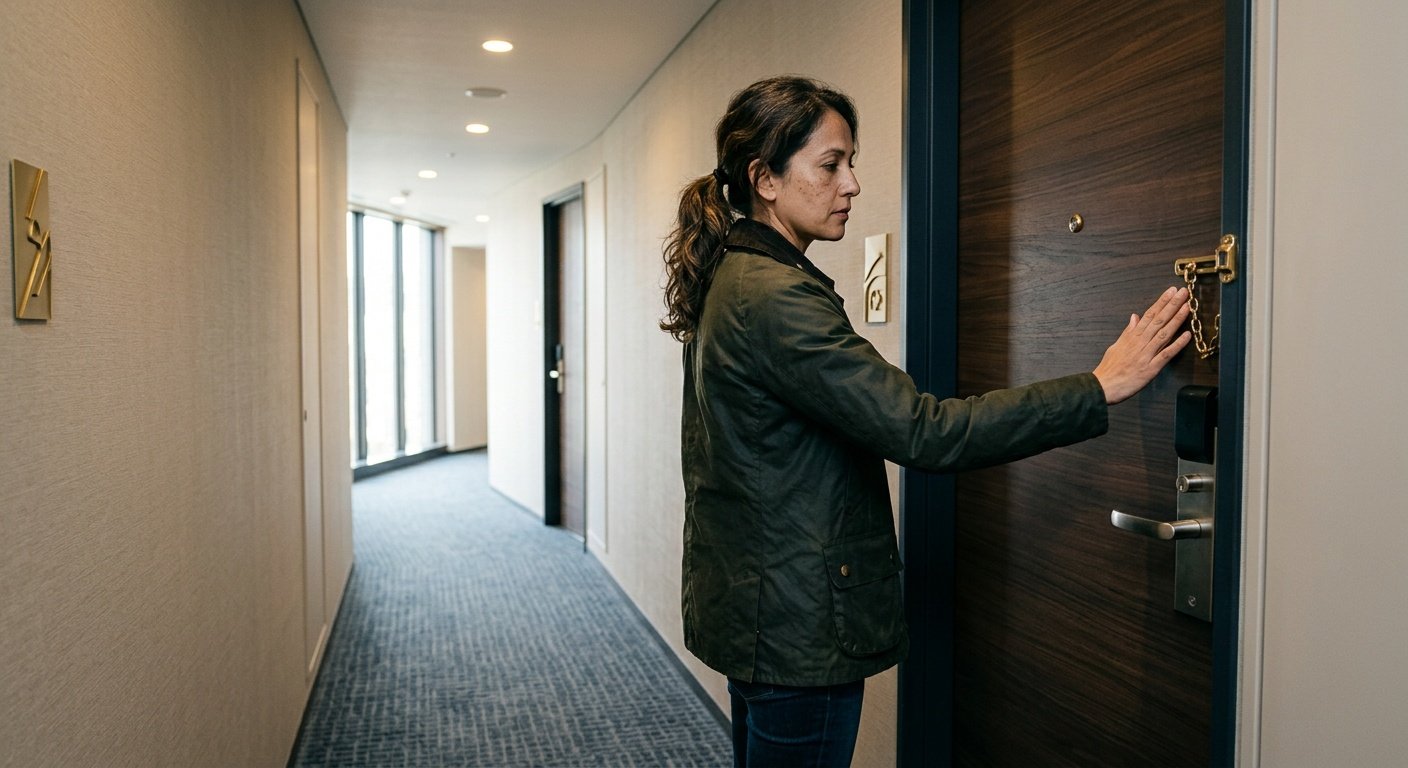
Proper use of built-in locks is your first and most important defense line. However, it is important to recognize that hotel locks have some limitations. Staff with master keys or unauthorized persons may access your room if the locks rely only on electronic card systems or conventional keys. Supplementary measures can strengthen your security further.
For deeper knowledge on room arrival security, refer to our travel security gear guides for essential check-in tips.
Supplementing Hotel Locks with Portable Security Devices
Despite proper use of built-in locks, travelers should consider carrying additional portable security devices. These tools provide a physical barrier that does not depend on the hotel’s lock system and can be especially useful against forced entry attempts or unauthorized access by those with master keys.
- portable door lock: Compact and easy to install without tools, these travel locks typically attach to the door frame or handle to block door opening from the outside. They work independently of the hotel’s lock system and add a layer of security regardless of master key access.
- Door Wedges: Simple rubber wedges placed under the door prevent it from opening inward. Door wedges are silent, require no installation, and are useful when the floor and door setup is suitable. However, their effectiveness depends on the door clearance and floor type.
- door wedge or alarms: These devices trigger an alert if the door is opened or tampered with. They provide a noisy deterrent during the night but must be tested for the specific flooring and door type to ensure proper function.
While portable devices are practical, their suitability varies. For example, some doors, such as sliding doors common in some Airbnb properties, or hotel doors with unusual jambs, might not fit certain locks or wedges. Always test devices in your room before relying on them overnight.
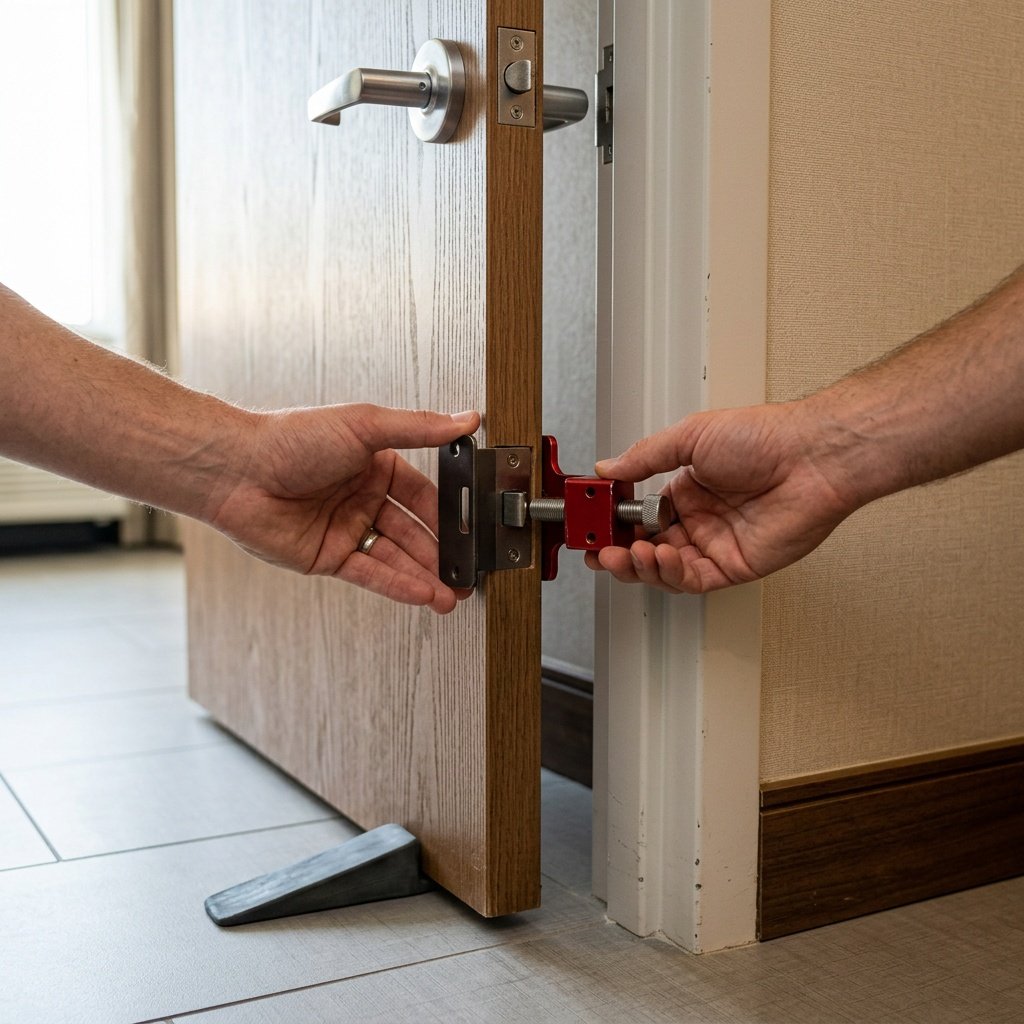
Using a portable door lock along with the hotel’s deadbolt and latch creates a layered security approach that greatly reduces risk from master key access or forced entry attempts. When selecting a portable lock or wedge device, consider the size, weight, and ease of installation to fit your travel packing preferences.
To explore trusted products for portable hotel security devices, check our travel security product reviews. These reviews provide unbiased assessments to help you make informed choices on the best portable door locks, wedges, and alarms.
Securing Valuables and Handling Hotel Safe Risks
Hotel safes are a common feature but should not be relied upon as the sole protection for your valuables. Many hotel room safes have master override codes or mechanical keys that staff may use to access them, sometimes without your knowledge. There have also been incidents of thieves targeting safes by stealing or breaking them open.
Practical guidance for protecting your valuables includes:
- Use the hotel safe only to store items you can replace, such as extra cash, passports, or electronic devices you don’t carry all the time.
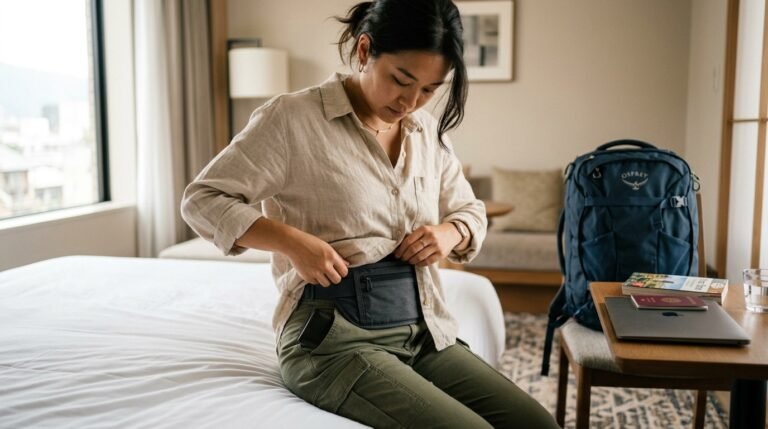
- Keep irreplaceable or highly valuable items like jewelry or sensitive documents on your person or in a portable travel safe that can be secured to a fixed object inside the room.
- Consider using a lockable travel pouch or small portable safe, which allows for better control and reduces reliance on the hotel’s often vulnerable safes.
Understand that no safe is perfectly secure and that the risk of staff access, master keys, or physical tampering exists. Staying vigilant about what you leave in the hotel safe, combined with carrying critical valuables securely, provides a safer strategy overall.
If you want to learn about recommended travel safe product guides and how best to use them, see our in-depth travel safe product guides.
Hotel Room and Airbnb Security Habits to Adopt
Securing your hotel room door is only part of maintaining overall personal safety. Adopting specific security habits helps reduce vulnerabilities from staff access, previous guests, or rental property issues, especially in short-term rentals like Airbnb.
These practical habits improve your room security:
- Inspect on Arrival: Check door locks, peepholes, and if possible, scan for any security cameras inside the room. Identify fire exits and escape routes in case of emergency.
- Avoid “Please Clean My Room” Signs: Using these signs signals vacancy. Instead, use the “Do Not Disturb” sign to imply presence and discourage unauthorized entry.
- Airbnb-Specific Checks: Test all door and window locks immediately. Review property ratings carefully for security-related feedback. Be mindful of hidden camera presence by scanning the room, especially in private rentals.
- Report Issues Early: If you find non-functioning or suspicious locks, inform the property management or hotel front desk immediately and request a room change if unresolved.
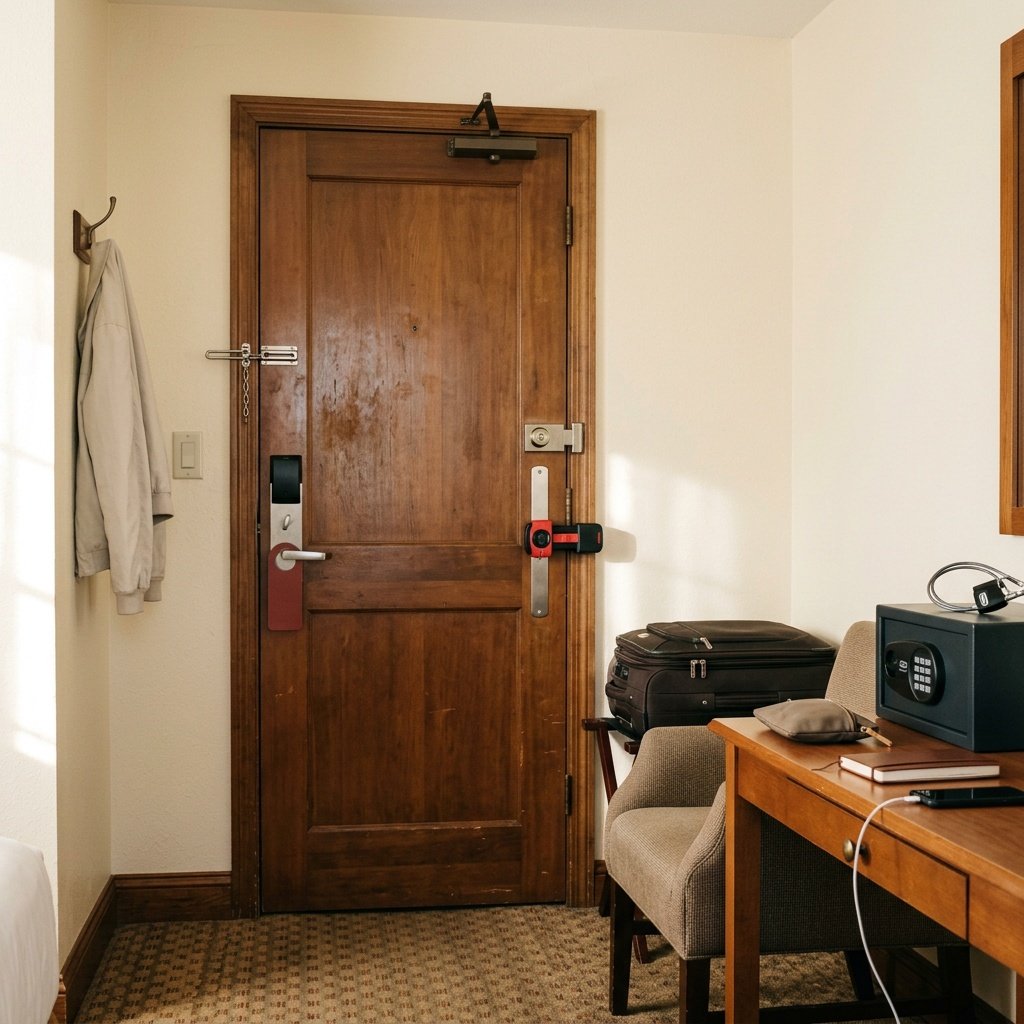
These routines go beyond locks to create a mindset of awareness and proactive control, which is essential to minimizing risks during your stay. For more detailed Airbnb safety advice specifically tailored to rentals, visit our Airbnb safety and security guides.
Quick Safety Tips and Common Mistakes to Avoid
Many travelers unknowingly undermine their hotel room security by making avoidable mistakes. Being aware of these common errors ensures your efforts are effective:
- Relying on a Single Lock: Using only one lock, such as the card key or chain, leaves you vulnerable. Always engage all available locks fully.
- Trusting Hotel Safes Exclusively: Do not leave all valuables in the in-room safe without additional precautions due to override access.
- Signaling Vacancy: Leaving cleaning signs or opening windows signals the room is empty, attracting opportunistic intruders.
- Neglecting Portable Devices: Skipping the use of supplemental devices like wedges or portable locks reduces your layer of protection.
Incorporate these quick wins to reinforce your room security every time you settle in or leave temporarily:
- Double-check locks by physically testing the door before sleeping or leaving.
- Keep the “Do Not Disturb” sign visible when away.
- Use a portable door lock or wedge especially at night.
- Store your most critical valuables on your person or in a portable travel safe.
Following these practical tips avoids the most common pitfalls that travelers fall into and substantially enhances your hotel room security.
Summary Checklist: How to Secure Your Hotel Room
- Immediately upon entering, identify and engage all built-in locks: deadbolt, latch/chain, and verify with a gentle door pull test.
- Use a “Do Not Disturb” sign instead of cleaning requests.
- Deploy a portable door lock, door wedge, or alarm device to supplement the built-in locks, testing them before use.
- Store replaceable valuables in the hotel safe, but keep irreplaceables on your person or in a portable locked safe.
- Inspect windows, peephole, and locks on arrival, report any issues promptly.
- For Airbnb stays, check locks on all doors and windows, watch for hidden cameras, and secure your room as you would in a hotel.
- Avoid common mistakes like relying on a single lock or signaling room vacancy.
By following this comprehensive guide on how to secure your hotel room, you’ll significantly reduce risks, have greater peace of mind, and enjoy your travel experience with confidence.