
How to Secure Your Hotel Room
How to secure your hotel room begins with fully engaging all built-in locks and physically confirming their security. This step is crucial to prevent unauthorized access, theft, or intrusion, and to protect your personal safety and valuables throughout your stay.
This guide helps you understand each lock type on a hotel or short-term rental door, shows how to supplement them with portable security devices, explains the limits and safe use of hotel safes, and shares important habits to improve your overall security awareness. You will also learn about common mistakes travelers make and how to avoid them.
Key Takeaways
- Always engage every built-in lock (deadbolt, chain latch, peephole) fully and test the door’s security by pulling it gently inward.
- Supplement hotel door locks with portable devices like travel locks, door wedges, or alarms for added physical protection against master keys or forced entry.
- Use hotel safes cautiously: only store replaceable items, and keep irreplaceable valuables on your person or in portable travel safes secured to fixed objects.
How to Use Built-In Hotel Room Locks Correctly
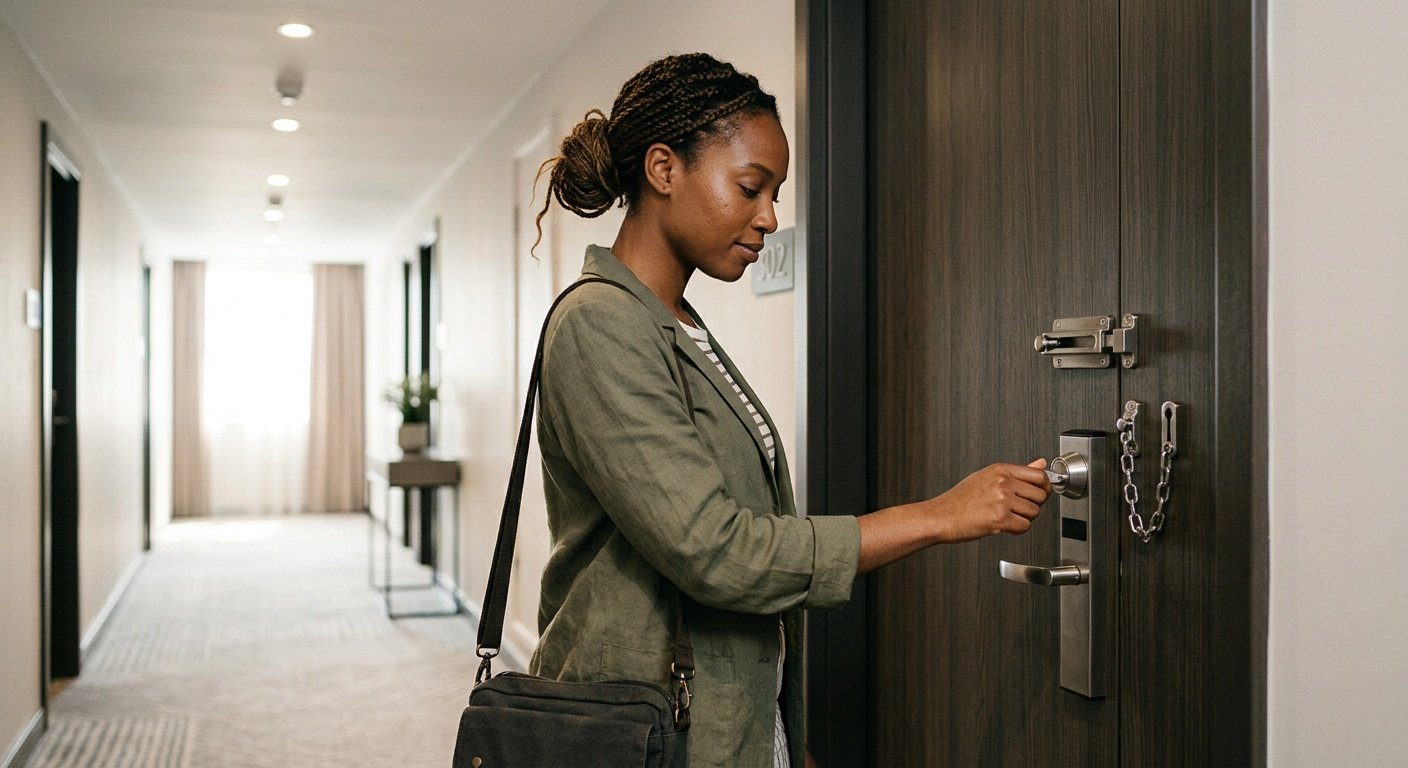
The foundation of hotel room security is the proper use of the room’s built-in locks. Most hotel doors feature a combination of several security devices designed to prevent unauthorized entry, but these only work when fully engaged and verified.
- Deadbolt lock: This is usually the strongest lock on your door. Ensure it slides fully into the door frame until you hear or feel it click securely. It resists door opening better than regular latch locks.
- Latch or security chain: Many hotel doors have an additional internal latch, chain, or swing bar. Engage this lock every time you are inside the room, especially at night or when unattended. It allows limited door opening but prevents full access.
- Peephole: Check that the peephole is clear and not obstructed. Use it to verify visitors before opening the door. Some guests cover the peephole from the outside, so a quick visual check on arrival can detect tampering.
After engaging all locks, always pull gently on the door from inside to confirm it cannot be pushed or pulled open. This simple physical test ensures every lock is properly seated and effective.
Additionally, use the hotel’s “Do Not Disturb” sign rather than housekeeping cards or “Please Clean My Room” signs. This signals that the room is occupied and discourages unnecessary entry attempts, reducing risk.
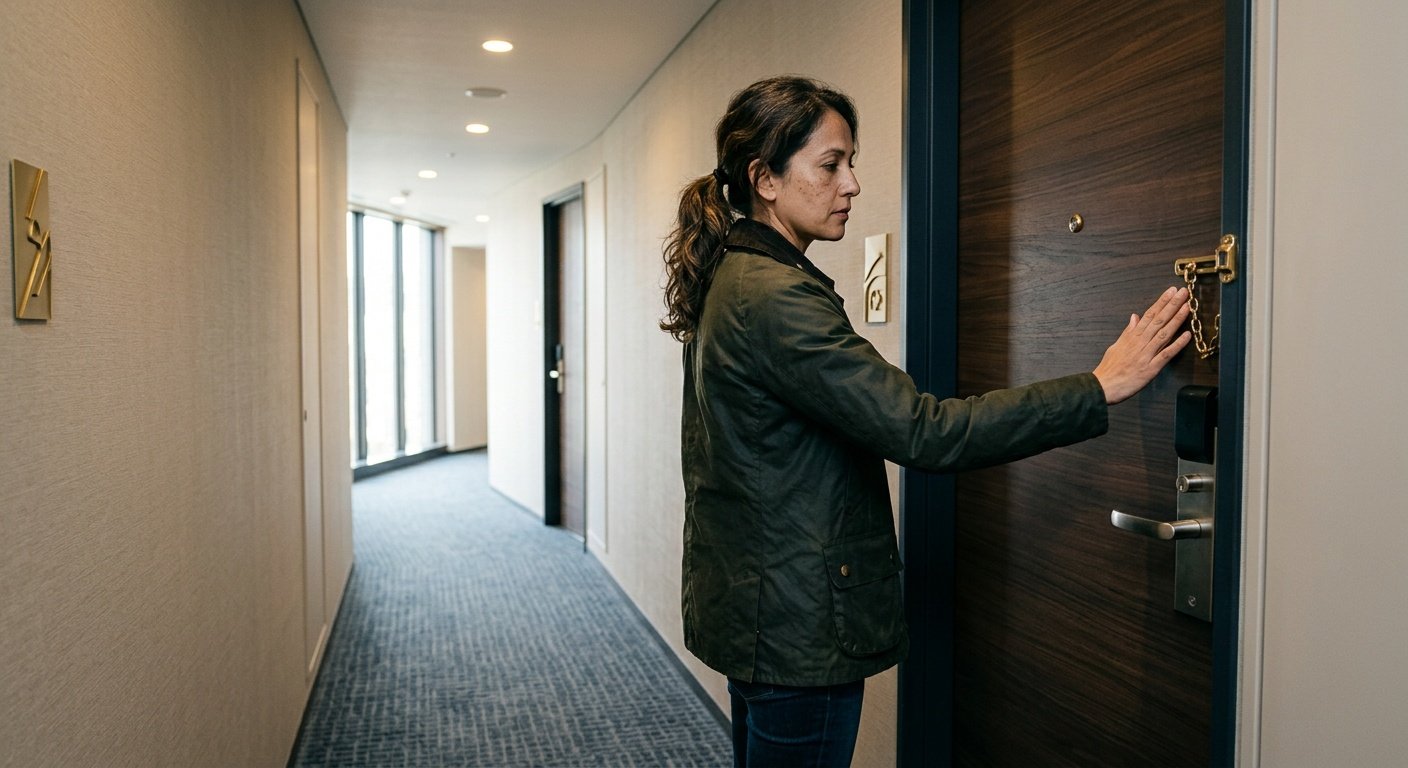
Hotels and short-term rentals vary in locking mechanisms, so familiarize yourself with the specific types on your door. Never assume the locks are self-explanatory or pre-locked.
For enhanced check-in precautions and more arrival security tips, see our travel security gear guides for related advice that complements proper lock usage.
Supplementing Hotel Locks with Portable Security Devices
Built-in locks are an important first line of defense, but do not assume they provide complete protection. Staff with master keys, past guests with copied cards, or intruders familiar with hotel lock vulnerabilities can sometimes gain access. To mitigate these risks, supplement your door security with portable devices designed for travelers.
- Portable door locks: These lightweight, compact devices fit over or inside the door frame and prevent the door from opening even if someone has a key. They work independently of the hotel’s lock system and are effective against unauthorized entry. Examples include travel locks that clamp onto the door handle or wedge locks that brace inside the door jamb.
- Door wedges: Simple rubber or plastic door wedges placed under the door block it from opening. They need an inward-opening door and a suitable floor surface without large gaps to work well. They also serve as a noise-triggering alarm when pressure is applied.
- Door alarms: Pressure-sensitive alarms placed behind the door alert you with a loud sound when someone attempts forced entry. These tools provide an early warning during the night or when you are inside.
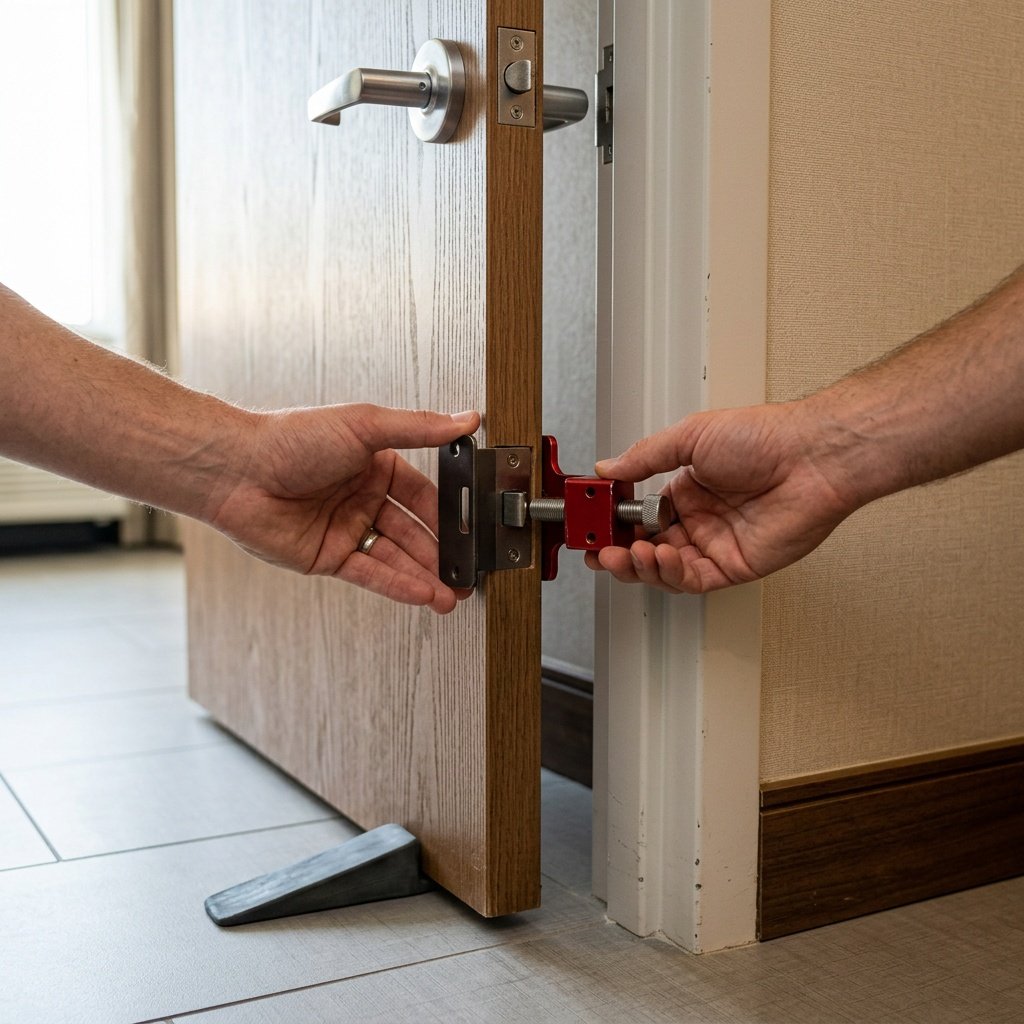
Keep in mind that the effectiveness of these devices depends on door design, floor type, and how the door opens. For example, sliding doors, outward-opening doors, or doors with large clearance gaps under them may not support certain devices. It’s best to carry two different styles if you frequently stay in diverse accommodation types.
Using these devices every night or when leaving the room adds a reliable physical barrier against unwanted access, even circumventing hotel master key systems.
For trusted portable security tools suitable for travel, refer to our travel security product reviews that evaluate effectiveness and ease of use.
Securing Valuables and Handling Hotel Safe Risks
Many travelers trust the in-room hotel safe for their valuables, but this can be a false sense of security. Hotel safes often feature master override keys or universal codes accessible to staff or malicious actors.
Here’s how to responsibly handle hotel safe use:
- Only place replaceable or less critical items in the hotel safe such as passports, extra cash, or electronics you can afford to lose or replace.
- Never leave irreplaceable valuables like original jewelry, sentimental items, or sensitive documents exclusively in the safe. Instead, keep these on your person as much as possible.
- Consider a portable travel safe that can be locked to a fixed object, allowing you to keep valuables secure inside your room under your custody.
Also, inspect the safe door for signs of tampering or malfunction as soon as you arrive. Report any issues to hotel management immediately.
For detailed recommendations on portable safes and protecting valuables during travel, visit our comprehensive travel security gear guides.
Hotel Room and Airbnb Security Habits to Adopt
Securing your room goes beyond locks and devices. Your habits and vigilance have a significant impact on your overall safety and security, whether in a hotel or an Airbnb rental.
- Inspect the room thoroughly on arrival: Test all door locks, peephole clarity, window locks, and balcony access points. In rentals, also check for hidden cameras and verify property reviews beforehand.
- Use the “Do Not Disturb” sign consistently: This deters entry when you are away. Avoid signaling vacancy with housekeeping cards or “Please Clean My Room” signs, which invite unwanted access.
- Know emergency exits and fire safety information: Confirm available escape routes and alarm locations in case of emergencies.
- Report any security defects immediately: Nonfunctioning locks, suspicious conditions, or broken windows should be brought to management’s attention without delay.
- For Airbnb rentals: Treat the property with similar caution as a hotel. Make sure all locks work, windows close properly, and consider applying your own portable lock or door wedge if the door design permits.
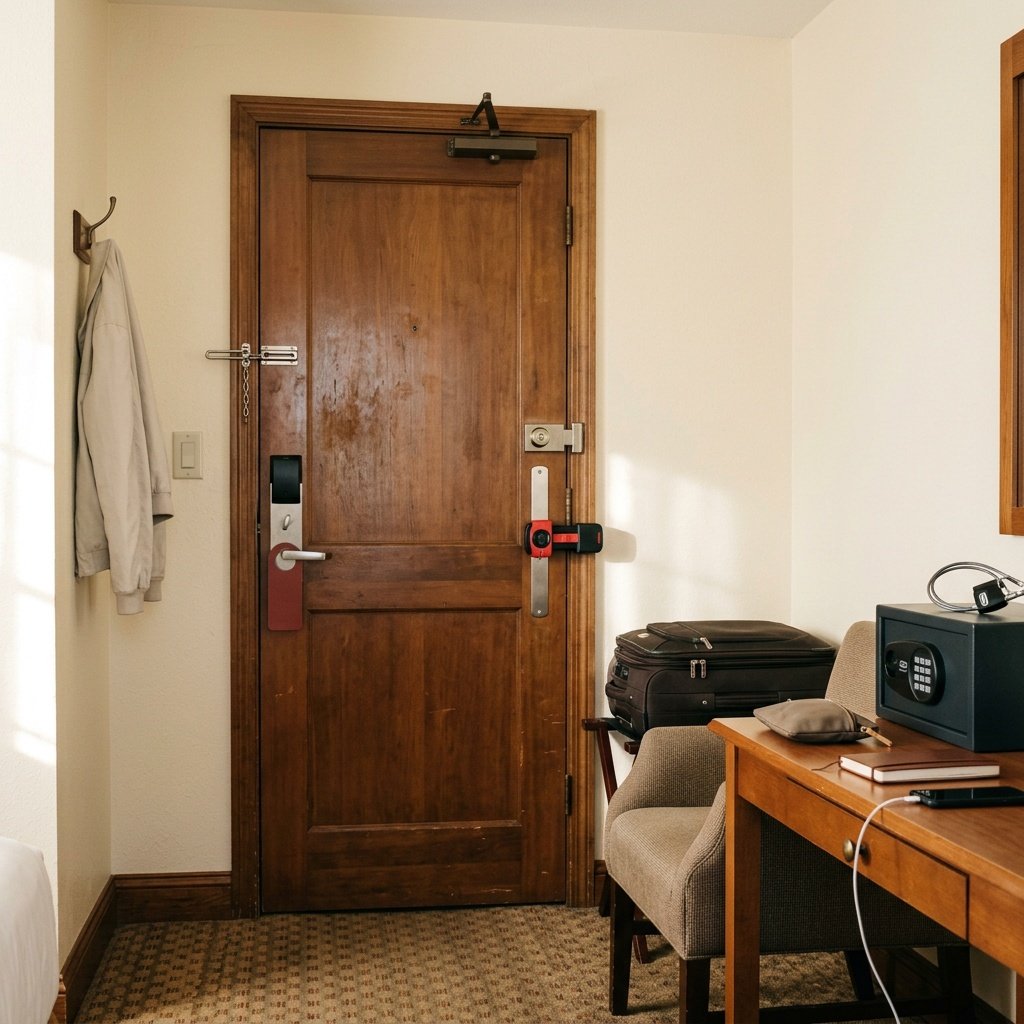
Building these habits increases your situational awareness and decreases the possibility of unnoticed intrusion or theft during your stay.
For more Airbnb-focused safety strategies, see our airbnb safety tips and travel security guides.
Quick Safety Tips and Common Mistakes to Avoid
Understanding common security mistakes can help prevent undermining your hotel room security efforts.
- Do not rely on one lock alone: Using only the card key or chain lock can leave you vulnerable. Always engage every built-in lock fully.
- Do not leave valuables unattended: Even when stored in the in-room safe or luggage, assume that unattended items face a risk. Keep important belongings with you whenever possible.
- Avoid signaling that the room is empty: Do not leave cleaning cards, open windows, or personal items outside—these can indicate vacancy to potential intruders.
- Use physical lock supplements consistently: Even if it feels secure, employ portable door locks or wedges every night or whenever you leave for better protection.
By avoiding these mistakes, you maintain a stronger security posture and peace of mind during your stay.
Final Checklist Before Sleeping or Leaving the Room
- All built-in locks (deadbolt, latch, chain) are engaged and tested with a gentle door pull.
- Portable door lock or door wedge properly installed for added security.
- Valuables secured appropriately: replaceable items in hotel safe, irreplaceables on person or in portable safe.
- “Do Not Disturb” sign displayed if leaving or overnight.
- Windows and balcony doors locked.
- Room inspected for any visible security issues or tampering.
- Awareness of nearest emergency exits and fire safety procedures confirmed.
Conclusion
How to secure your hotel room effectively relies on thorough use of all the built-in locks combined with smart supplementing using portable door locks and wedges. In addition, understanding the limitations of in-room safes and adopting alert security habits in hotels and Airbnb rentals ensures a practical and reliable approach to keeping you and your valuables safe during your travel.
By engaging all locks fully, verifying their security, adding physical barriers, and safeguarding possessions thoughtfully, travelers can reduce risks from unauthorized access, even considering vulnerabilities like master keys or housekeeping access.
Proper preparation and vigilance provide peace of mind so you can focus on enjoying your trip.